
Detroit's Strategic Plan
OUR VISION:
Connecting our diverse community through our love of chemistry
OUR MISSION:
Enabling the practitioners of chemistry of today and tomorrow to build a better world through professionalism, integrity, and community service
About:
The Detroit Local Section (DLS) held a Strategic Planning Retreat at Lawrence Technical University on November 6-7, 2021. The retreat was facilitated, and used ACS LDS ® methodology, as taught in the ACS Strategic Planning course, and was customized for DLS as a [first generation] planning retreat. The planning methodology was reviewed with participants at the beginning of this workshop. Facilitators then guided participants in applying the strategic planning concepts to DLS’s current situation. Facilitators were Bill Carroll and Larry Krannich. There were 11 participants.
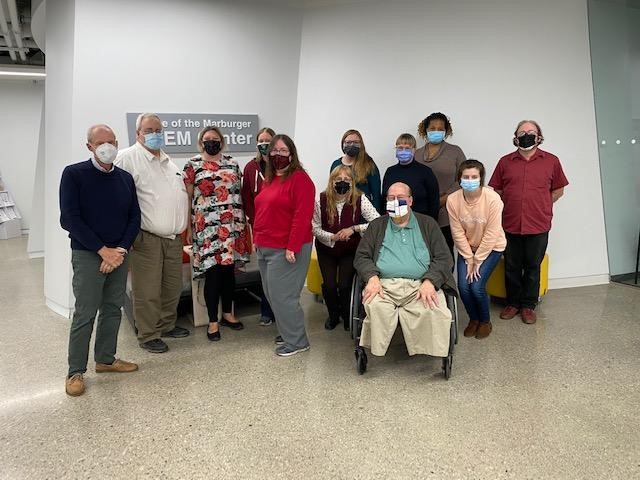
The Detroit Local Section (DLS) needs your help! Its members are our key stakeholders and the current leaders want to serve you by living out its mission. Contact us if you want to learn more about any aspect of the following strategic plan or if you want to get involved in any of the tasks needed to reach our goals.
Approach
The DLS sought out to do a strategic planning process to inform their work for the next five years. They had not previously done a strategic plan for the section and did not have a vision or mission statement. Enhanced membership engagement was key to their success. They have received a significant number of ChemLuminary awards and aspire to a coordinated effort toward LS award in the large category. While section resources are strong, a strategic plan can provide guidance for deploying those resources.
DLS’s strategic planning process started with information gathered in a pre-work survey sent to retreat invitees. This information was augmented by facilitator study of background materials provided by the Section prior to the retreat. From pre-work, ideas were gathered on DLS stakeholders, vision, mission, strengths, weaknesses and possible goals. This pre-work input was collated and made available to participants.
At the retreat, the facilitators began by asking participants their expectations for the retreat. Then, facilitators introduced the ACS Leadership Development System® Strategic Planning Process (documented in the Retreat Participant Guide). Planning process steps, in the order covered in the retreat, were:
-
-
- ACS Strategic Planning Process and Terminology
- Developing a Strategic Plan: Stakeholders; Vision and Mission
- Change Drivers
- Environmental Scan (STEP), Challenges and Opportunities (TOWS)
- Identify Environment Trends (STEP)
- Recognize Strengths and Weaknesses
- Relate to Critical Success Factors and Barriers
- Identify Threats and Opportunities
- Goals Development
- Strategies Portfolio
- Identify Potential Strategies (Brainstorm)
- Down Select Strategies (Weighted vote)
- Check Goal/Strategy statements vs. SMART criteria
- Opportunity Mapping
- Identification of Champions
- Implementation Planning
- Establishing measures
- Developing Action Plans for Strategies
- Pitfalls
- Next Steps
- Review and Wrap Up
- Plus/Deltas Discussion
-
Our Goals & Strategies
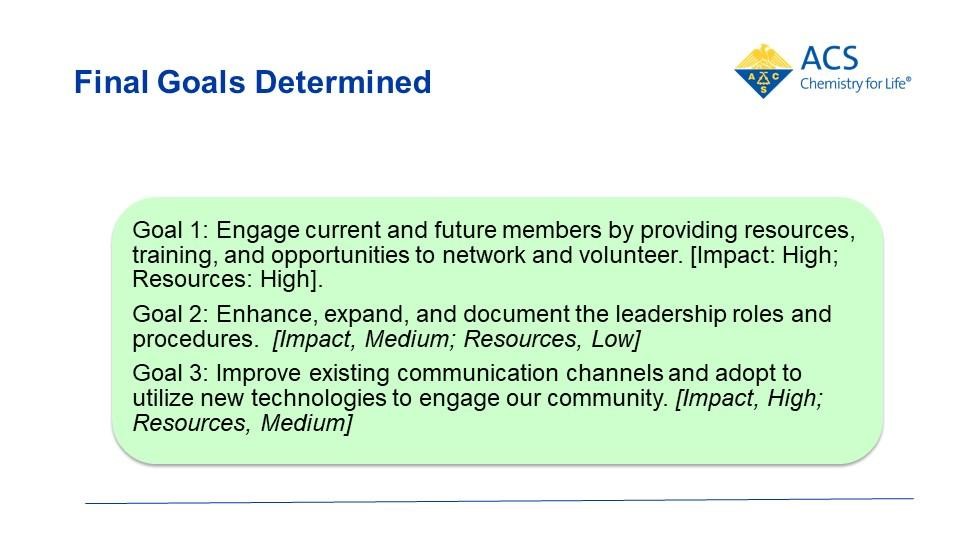
Our first goal: Engage current and future members by providing resources, training, and opportunities to network and volunteer.
What will this look like? We’ve identified three key strategies here:
- Develop a tool and provide a resource list for those interested in hosting events by 2Q22.
- Develop by 3Q22 four networking events (1 social, 3 for targeted groups) and implement by 4Q23. Targeted groups include young professionals, graduate students and undergraduate students, etc.
- Collaborate with the Communications Committee to create and maintain guidelines for publicizing events and create a volunteer opportunities and events calendar by 4Q22.
By addressing these areas, we hope to better serve all of you, our fellow members, and help you network and volunteer more easily than ever before.
Our second goal: Enhance, expand, and document the leadership roles and procedures.
There are two key strategies here that we hope to address:
- By 4Q22, create a digital archive and up-to-date Officer and Committee Chair Handbook to be reviewed and updated by the chair-elect each year by March 31.
- Develop a leadership recruitment program that includes an annual open house to increase awareness of the Detroit Local Section including its leadership opportunities.
The first strategy has been partially completed. We have established a digital archive and have started populating it with various forms, reports, photos, etc. A digital depository will keep things running smoothly at the local level and hopefully help us provide better content across our communications. The second part of this strategy, the handbook, will be vital in improving continuity and consistency year after year from leadership locally. The second strategy is still in progress, but will hopefully help communicate potential leadership opportunities in a broader, clearer, and more transparent fashion.
Our third and final goal: Improve existing communication channels and adapt to utilize new technologies to engage our community.
There are two key strategies we hope to address:
- By the end of 4Q22, the Communications Committee will publish a policies and procedures handbook for interacting with our community.
- By 4Q23, establish a consistent and engaging presence on social media and an informative website for our community.
The first strategy is we simply need to do a better job consistently communicating with our membership. This is an admission that we have not been as successful as we would like to be. As a strictly volunteer organization (locally), we have never stopped to codify how to communicate best as a unit. Rather than continue working independently, we plan to work cohesively towards a common goal by establishing a Communications Committee to create a set of guidelines to help the section better communicate with our members. The second strategy is to establish a consistent and engaging presence on social media and maintain an informative website for our community. Technology and lines of communication change constantly and this goal will help tackle that challenge.
That concludes the introduction of the strategic plan for the section. As we progress, we hope you will see positive changes. We will be tracking and reporting our progress at our monthly business meetings, which are open to all of our members to attend.


